People’s Liberation Collaborative
Structure & Governance
Structure of PLC
Polycentricity: Many Centers of Power
PLC uses a polycentric approach to organizational structure and governance.
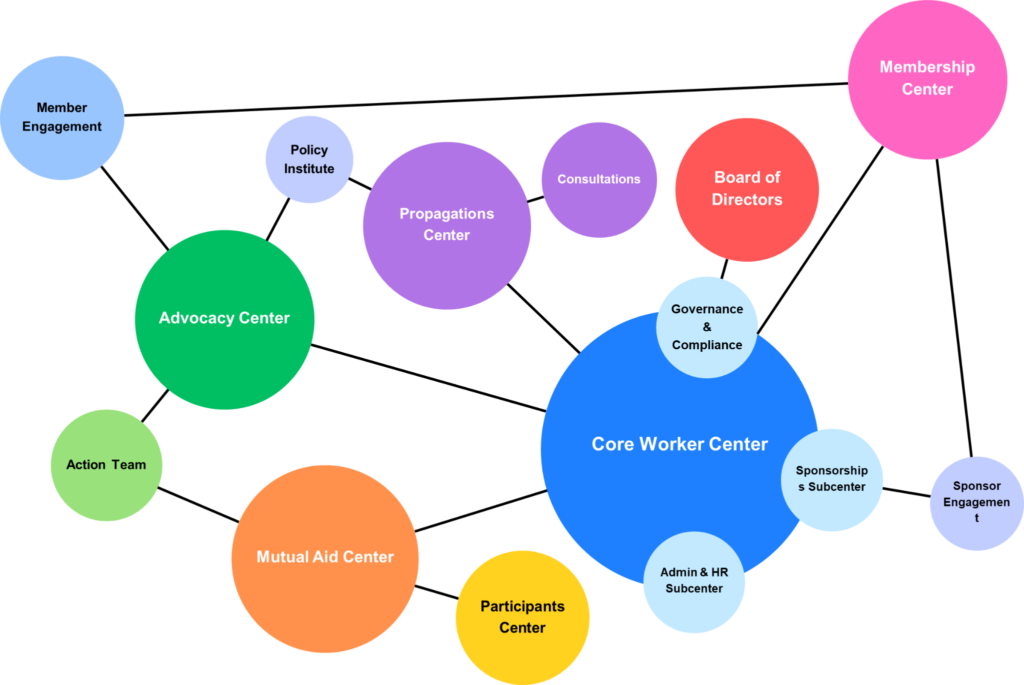
Polycentricity disperses power across different “centers,” each with their own described goals, accountabilities, and autonomies. Each center then connects back to the Core Worker Center, which holds PLCs Core Mission, Vision, Principles and Beliefs.
Why Polycentricity?
Tradition organizations typically follow a monocentric system of governance and decision-making, where there’s one main center of power (usually a Board of Directors or Executive Suite) from which all other powers originate. We believe that this top-down style of organizational hierarchy is a major cause of the current systemic exploitation people and resources we see today.

Sociocracy & Dynamic Decision Making
Dynamic Governance or Dynamic Decision-Making is an effective model of participatory decision-making based on equivalence of power of all participants regardless of their position in an organization’s managerial hierarchy.
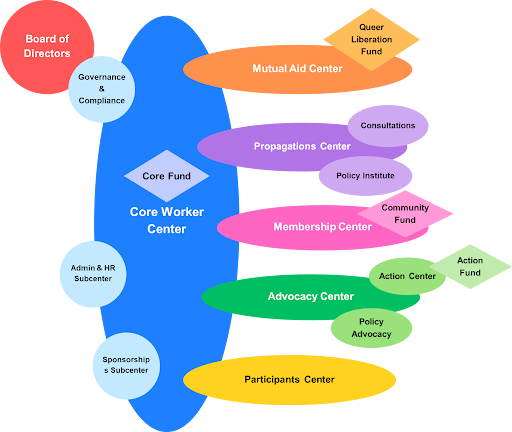
Sociocracy is the idea of shifting power to the people operating and utilizing the resources, rather than having power accumulated and dispersed in a top-down approach through administrative or executive teams.
With dynamic governance, every person is a center of power with their own autonomies, roles and responsibilities. Every person in the organization fills multiple roles and can move in and out of the roles flexibly, rather than filling a single position with a single job description.
Why Dynamic Governance and Sociocracy?
Dynamic Governance redesigns traditional organizational decision making, transforms ownership structure, and offers a vision of society based on needs and experiences. Sociocracy says that this power belongs in the hands of the people, and shapes systems around the needs and experiences of workers, communities, and the marginalized.